
A useful nail-care routine should fit the life you already have. Start with a few repeatable habits and a small kit, rather than a shelf of products with overlapping promises. This guide turns everyday care into a checklist you can adapt. It does not identify the cause of a nail change or recommend a treatment for it.
Start with your everyday tasks
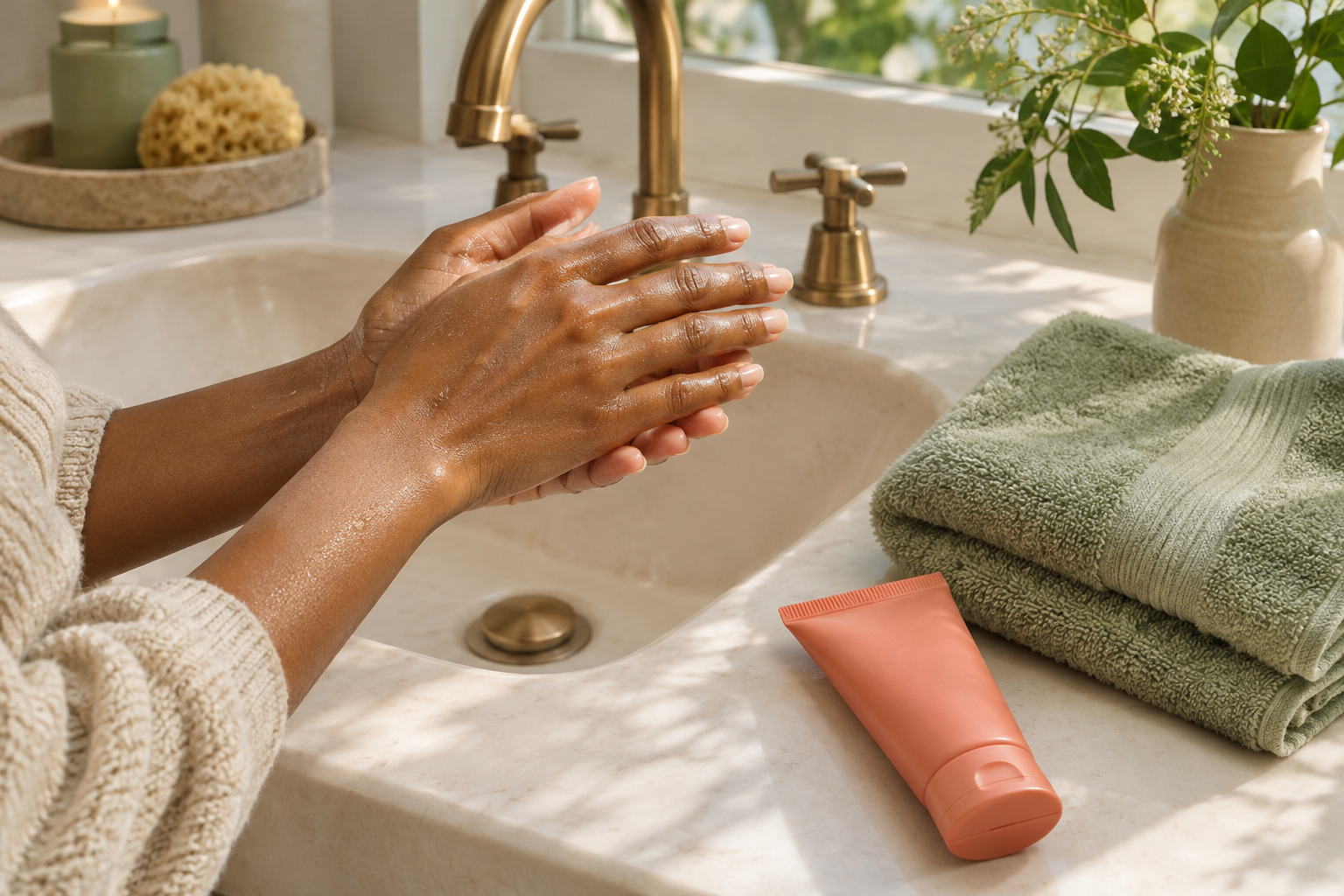
Think about when your hands get wet, which chores are hardest on your nails, and where you notice snags. Those observations can help you put the right supplies in the right place. Keep household gloves near the sink and a file with your grooming kit. A routine becomes easier when it answers a specific task instead of asking you to remember another long list.
The American Academy of Dermatology recommends keeping nails clean and dry, moisturizing after handwashing, and protecting hands during washing or cleaning. It also advises against biting nails, removing cuticles, or using nails as tools. These are general care habits; they are not a promise that every nail problem will improve with home care.
- Choose one place for clean grooming tools.
- Put gloves where you do wet household work.
- Use a bottle opener or other appropriate tool instead of a fingernail.
- Make the routine short enough to repeat on an ordinary weekday.
A quick daily check, without constant inspection
Use a normal grooming moment to notice comfort and obvious changes. You do not need to measure every ridge or compare your nails with filtered photographs. If something catches on clothing, decide whether it is a simple snag you can file gently or a change that deserves advice. Avoid repeatedly picking at an area while trying to work out what it is.
| Moment | Practical action | Keep it manageable |
|---|---|---|
| After washing | Dry your hands and follow your usual moisturizing routine | Keep the product beside an existing daily item |
| Before household cleaning | Use suitable protective gloves | Check that the pair is comfortable and usable |
| When you spot a snag | Use a proper file rather than tearing the nail | Keep a small file in your kit |
| When a change concerns you | Write down what you noticed and seek advice | A brief note is more useful than repeatedly checking |
The table is an organizational aid, not a clinical schedule. Shift it around your work, mobility, or care needs. If a professional has already given you instructions for a nail or skin condition, use those instructions rather than replacing them with a generic checklist from a blog.
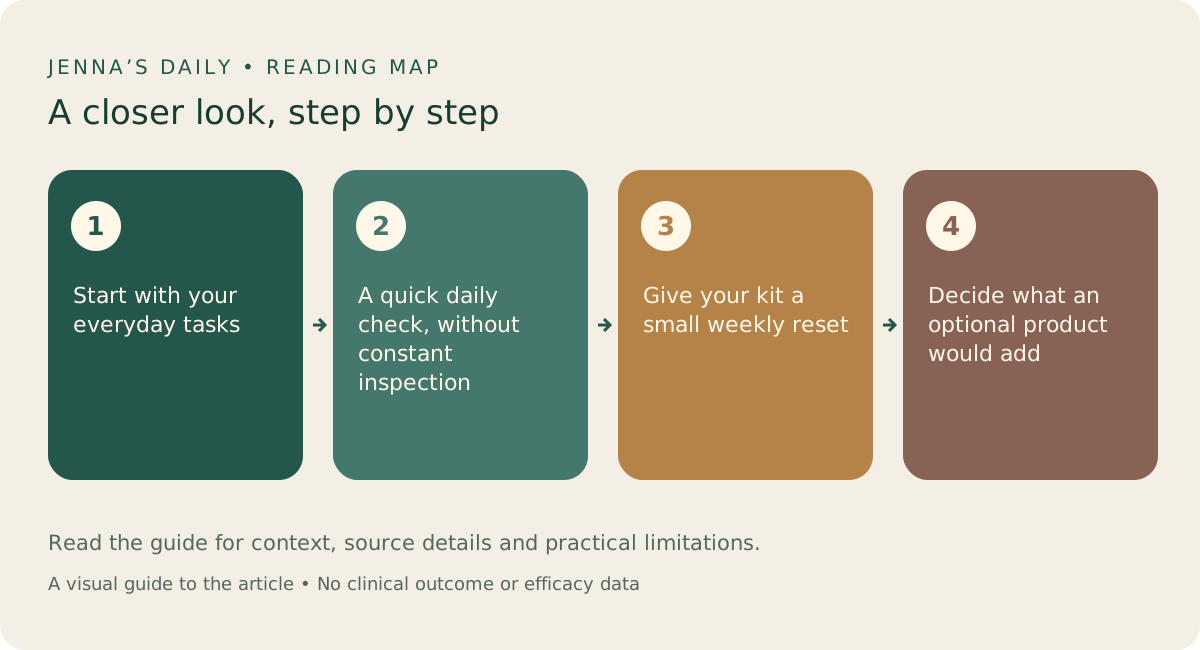
Give your kit a small weekly reset
Set aside a calm moment to check your tools and trim or file when needed. The AAD recommends cutting nails straight across and filing away snags. Choose a comfortable position with enough light to see what you are doing. If trimming is difficult, painful, or outside your reach, ask about appropriate help instead of forcing the task.
A kit does not need to be elaborate. List what you actually use, then remove duplicate items from your shopping list. For example, one person may want a simple file kept at home and another may need a second one in a work bag. That is a convenience decision, not evidence that buying more products improves nail health.
Do a simple supply check before shopping: is the clipper usable, is the file easy to find, and are household gloves where you need them? Replace a missing or unsuitable tool because it solves an actual task. You do not need a complete matching collection or a subscription to make a short grooming routine work.
The AAD's trimming guide makes a useful distinction between hands and feet. Fingernails can be cut almost straight across and then have the corners slightly rounded with a file; toenails should be cut straight across. Use that distinction when choosing which tool to put in your kit. The same guide advises smoothing rough edges in one filing direction and leaving cuticles alone.
| Part of the routine | AAD trimming distinction | Practical use |
|---|---|---|
| Fingernails | Almost straight across, then slightly round the corners with a file | Finish a rough edge without tearing it |
| Toenails | Cut straight across | Keep a separate toenail clipper in the kit |
Decide what an optional product would add
Before adding a nail-care oil, cream, or solution, name the job you expect it to do. Are you looking for a convenient moisturizer, a particular applicator, or something else? Read the complete package directions and warnings. A product marketed for appearance should not automatically be treated as a medicine for a suspected infection.
FDA explains that a product’s intended use matters when distinguishing cosmetics from drugs. Packaging language is therefore more useful than the look of a bottle. Keep the product label so you can check directions later, and bring it to a professional if you need advice. Our separate label guide explains how to organize that information without assuming that familiar ingredients prove a finished product’s results.
You can finish this routine without buying a specialist product. If an optional item interests you, compare its verified purpose, directions, warnings, and total cost with the task you want it to perform. Leave a product off the list when you cannot explain what it would add.
Know when to stop experimenting
The AAD advises seeing a dermatologist when nails change, swell, or hurt. It highlights the importance of care for nail problems in people with diabetes or poor circulation. A home routine should make room for that advice. Do not dig at a painful ingrown nail or keep trying new products while a concerning problem remains unexplained.
If you arrange an appointment, bring a short timeline, the names of products you have used, and the questions you want answered. You might ask which tasks you can manage at home, whether any product should be avoided, and what changes should prompt another call. Those answers can turn a broad checklist into a plan that matches your situation.
- Keep the daily routine brief.
- Use proper tools and everyday protection.
- Read directions before introducing an optional product.
- Seek professional advice for concerning changes instead of trying to diagnose them from a product page.
Sources & further reading
- American Academy of Dermatology: 11 dermatologists’ tips for healthy nails ↗
- FDA: Is It a Cosmetic, a Drug, or Both? ↗
- American Academy of Dermatology: How to trim your nails ↗
Manufacturer information, when cited, is a commercial source. It does not establish that a finished product is clinically effective.