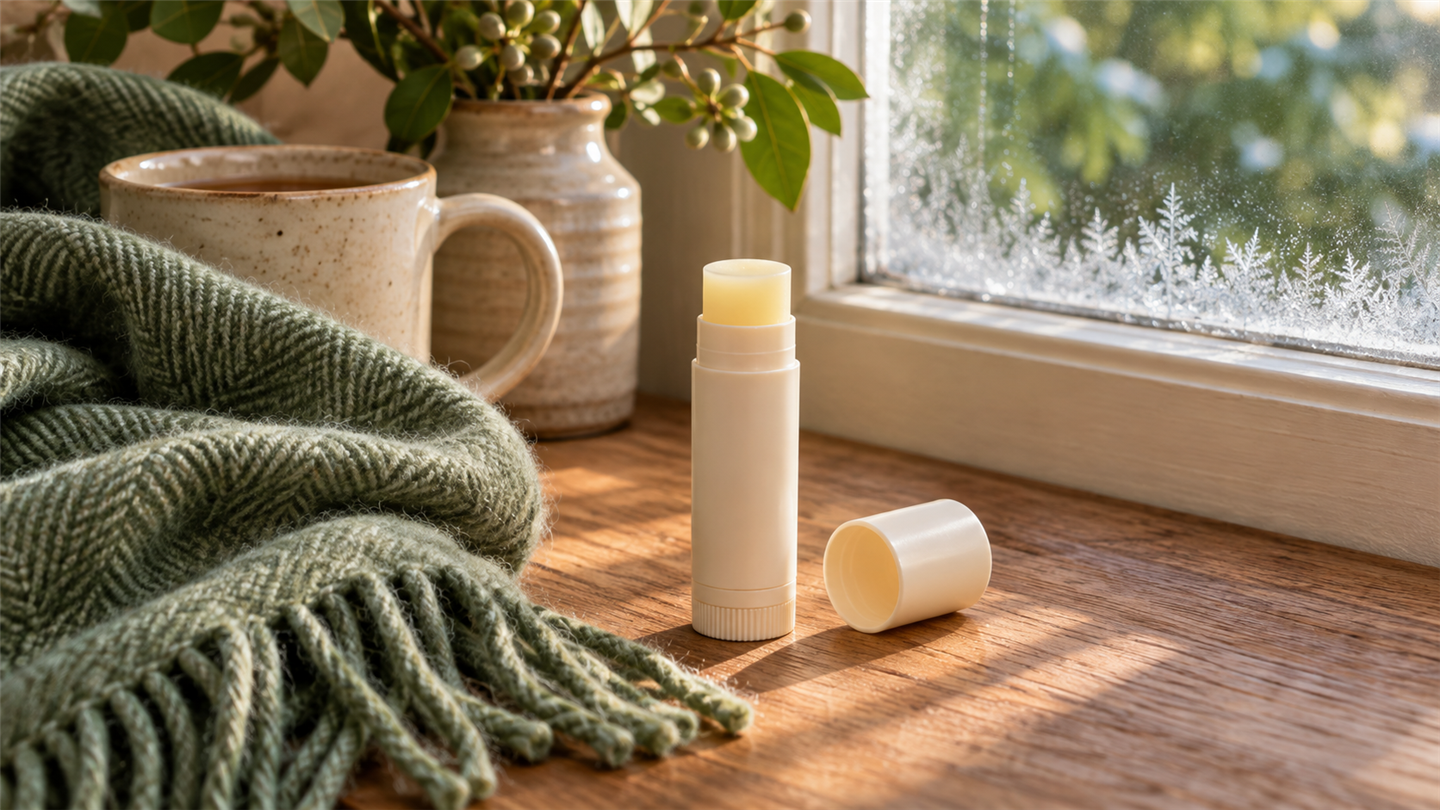
Your lips feel tight after a cold walk, so you swipe on a minty balm. It starts to sting. The American Academy of Dermatology (AAD) recommends setting aside lip products that burn, sting, or tingle on chapped lips. You can start with a gentler product and use the ingredient list to decide what to keep in your winter routine.
Pause the balm that stings
Cold, dry weather can leave lips chapped. The next clue is how a product feels when you put it on. If you notice burning or stinging, stop using that product on your lips. A flavored balm, lip plumper, or lipstick can be worth setting aside while your lips recover if it causes discomfort.
Itch, redness, and scaling can also occur with a reaction to a lip product. The timing gives you something useful to write down when symptoms recur. A dermatologist can help work out whether irritation, an allergy, or another cause is involved.
Turn the tube around
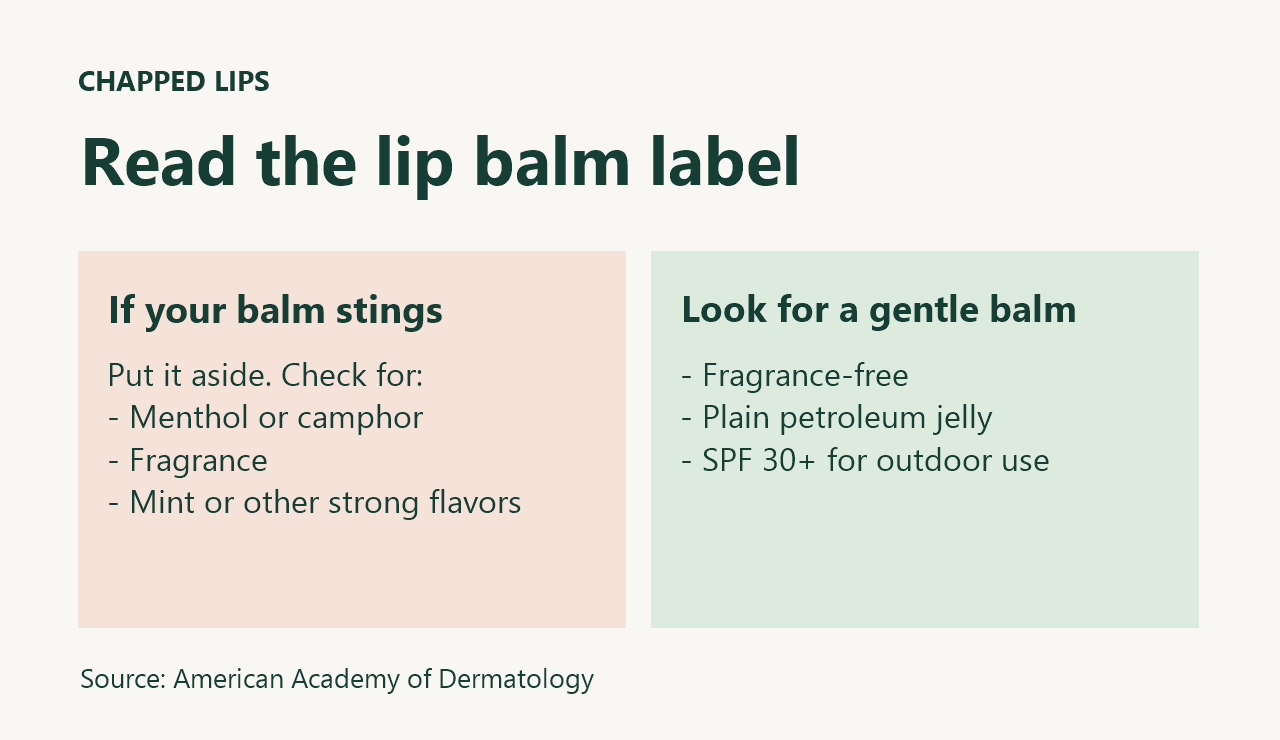
| Look for | What to do while lips are chapped |
|---|---|
| Menthol or camphor | Set aside formulas with these ingredients while your lips recover. |
| Fragrance or flavor | Choose a fragrance-free, unflavored option you tolerate. The AAD highlights mint, cinnamon, and citrus flavors as possible irritants. |
| Plain white petroleum jelly | Consider a plain ointment for very dry lips, especially before bed. |
| SPF 30 or higher | Choose a lip product with sun protection before going outside. Look for zinc oxide or titanium dioxide if you want to follow the AAD’s ingredient suggestions. |
On U.S. cosmetic labels, fragrance or flavor may appear as a single entry that represents a mixture. If you’re comparing products, look past the name on the front and check the ingredient list. “Unscented” may mean the product uses ingredients to mask odor, so check the list even when the balm has little smell.
Use one balm you tolerate
- Apply a comfortable balm several times during the day and before bed. If your lips are very dry, try plain white petroleum jelly.
- Use an SPF 30 or higher lip balm before going outdoors. Reapply every two hours while outdoors.
- When you catch yourself licking your lips, reach for the balm. Repeated licking can aggravate dryness. Let loose skin shed on its own.
When to see a dermatologist
If the chapping hasn’t improved after two to three weeks of gentle care, make an appointment with a dermatologist. Seek advice sooner if symptoms worsen or the discomfort interferes with eating or drinking. If symptoms keep coming back, bring photos of your lips and the ingredient lists from any balms, lip color, or toothpaste you use. Note when you started each product and when symptoms appeared.
Sources & further reading
- American Academy of Dermatology: Tips for healing dry, chapped lips ↗
- U.S. Food and Drug Administration: Fragrances in cosmetics ↗
- DermNet: Contact reactions to lipsticks and other lip care products ↗
Manufacturer information, when cited, is a commercial source. It does not establish that a finished product is clinically effective.