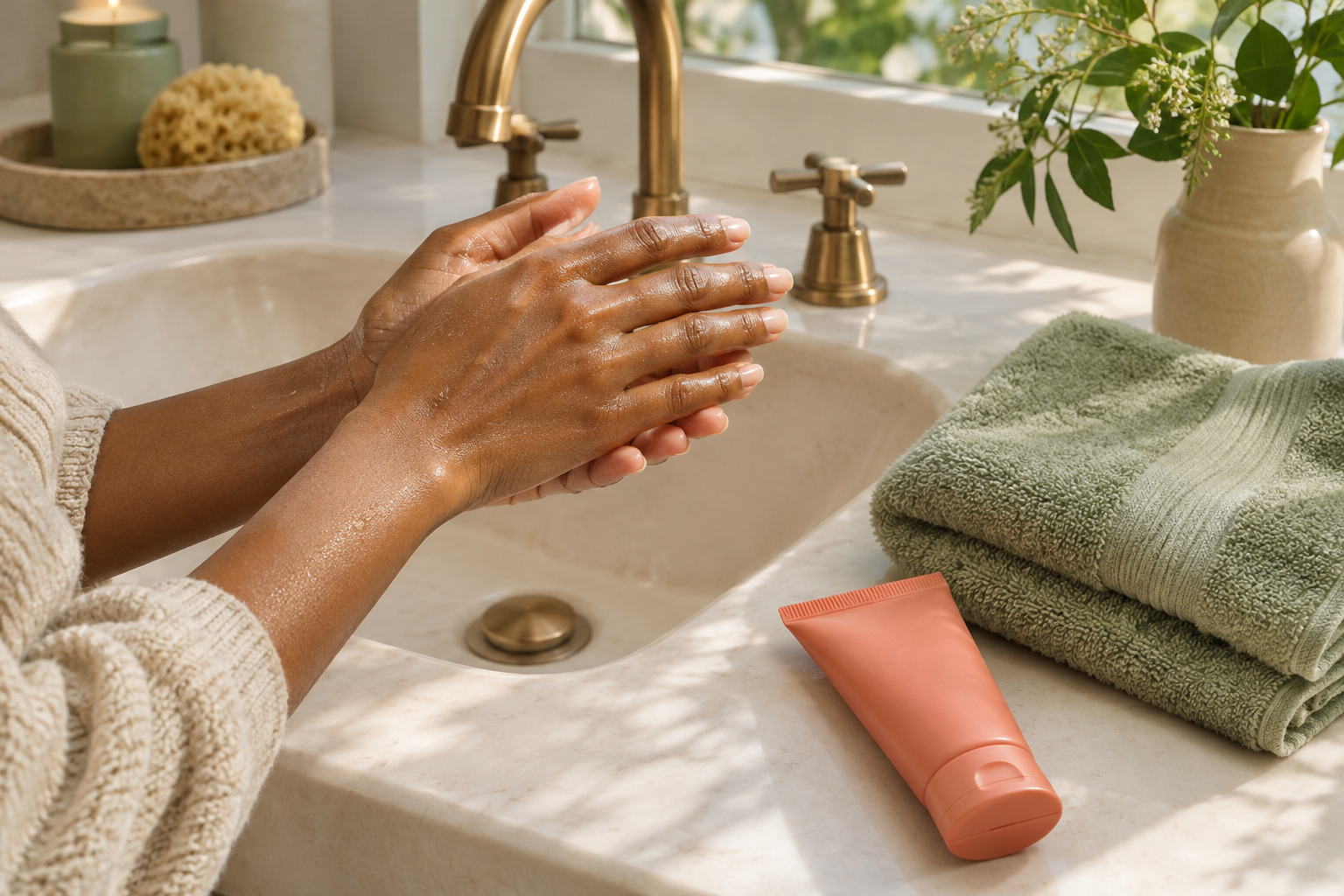
If your hands feel tight after a few trips to the sink, start by looking at what happens right after you rinse. The American Academy of Dermatology (AAD) recommends applying a hand cream or ointment after washing. You can keep the handwashing you need and make moisturizing part of the same routine.
Finish your handwash with moisturizer
The Centers for Disease Control and Prevention recommends scrubbing with soap for at least 20 seconds, rinsing under clean running water, and drying your hands. Wash at key times, including after using the toilet and before preparing food. If hot water feels uncomfortable, use lukewarm water.
- Wash and rinse as you normally would, including between your fingers and around your nails.
- Gently pat your hands with a clean towel. At home, the AAD suggests leaving the skin slightly damp before applying moisturizer.
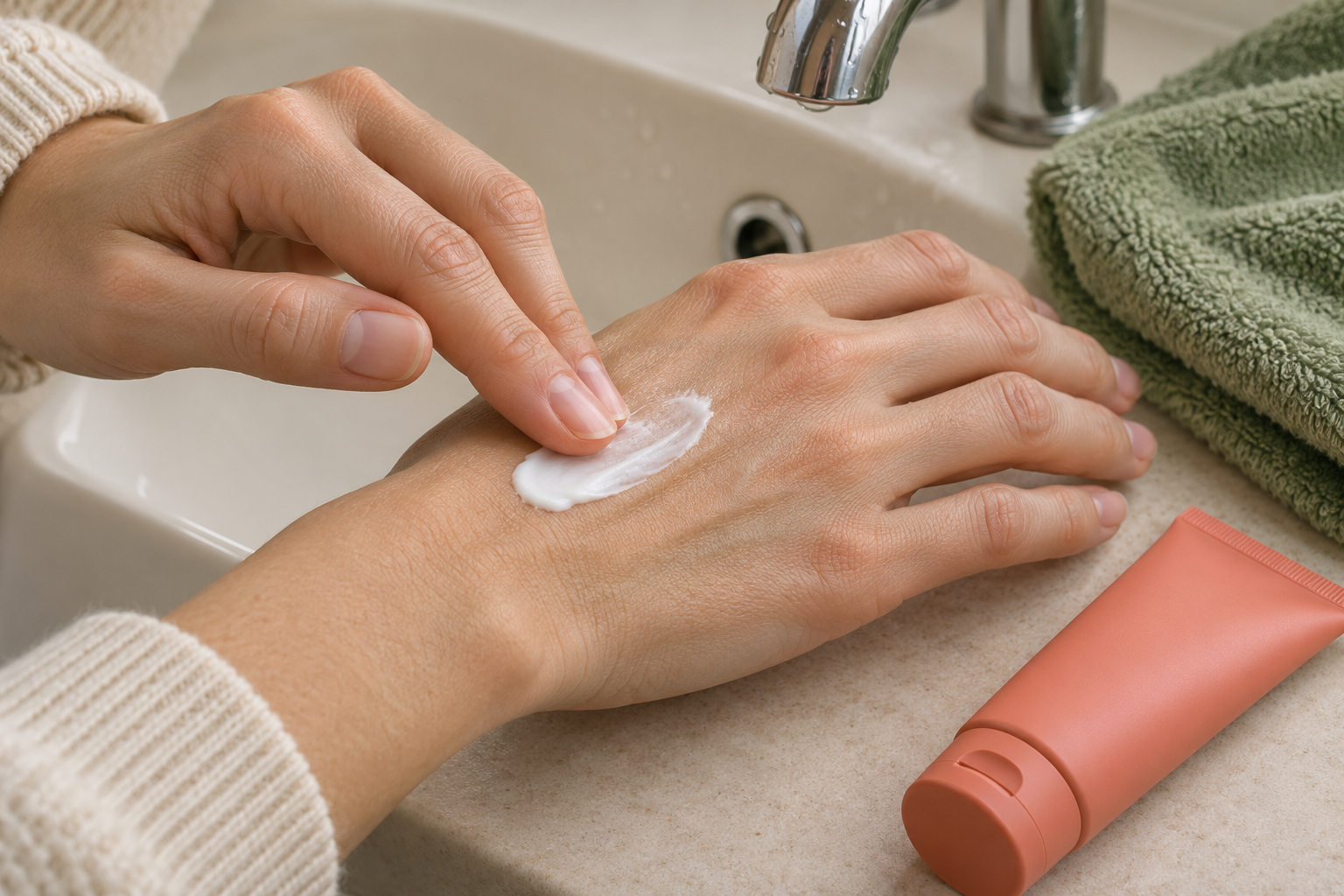
- Smooth on hand cream or ointment right away, including the skin around your fingertips and nails.
Choose a cream you will use
For dry hands, the AAD suggests a fragrance-free cream or ointment. A label that says unscented may still contain ingredients added to mask odors. Mineral oil and petrolatum are two ingredients the AAD highlights for dry, chapped hands. If you already have a fragrance-free cream you tolerate, start there.
Think about when you will reach for it. A cream that feels comfortable during the day may be easier to use at the sink. A thicker ointment may fit better at bedtime if you dislike its feel while typing or handling things.
Pay attention to the rest of your day
Washing your hands is only one source of water exposure. The AAD also recommends protecting dry hands during tasks that keep them wet, such as washing dishes. Leave waterproof household gloves near the dish soap if that is the task you tend to do barehanded.
| When | What to try |
|---|---|
| At your usual sink | Keep the cream where you can see it when you reach for a clean towel. |
| After using sanitizer | When soap and water are unavailable, use a hand sanitizer with at least 60% alcohol. Let it dry before applying moisturizer. |
| When doing dishes by hand | Wear waterproof household gloves and take them off when the task is finished. |
Know when to ask for help
Ask a clinician or dermatologist if your hands stay very dry and painful despite regular moisturizing, or if you develop deep cracks that bleed, blisters, or skin that weeps. The AAD notes that hand eczema can look like ordinary dryness and may need different care.
If you notice a pattern, write down when the irritation started and which soaps, gloves, or cleaning products you had been using. Bring that information to the visit so you and your clinician can discuss possible triggers.
Sources & further reading
- Centers for Disease Control and Prevention: About Handwashing ↗
- American Academy of Dermatology: Dry skin relief from handwashing ↗
- American Academy of Dermatology: Dermatologists' top tips for relieving dry skin ↗
- American Academy of Dermatology: Dry, scaly, and painful hands could be hand eczema ↗
Manufacturer information, when cited, is a commercial source. It does not establish that a finished product is clinically effective.