A lifting edge can make gel polish tempting to peel. The American Academy of Dermatology (AAD) advises against picking, scraping, or filing gel polish off, which can damage the nail. First check which product was applied. The home method below is for gel polish meant to soak off. If you are unsure what is on your nails, ask the salon before you start.
Find out whether it is soak-off gel
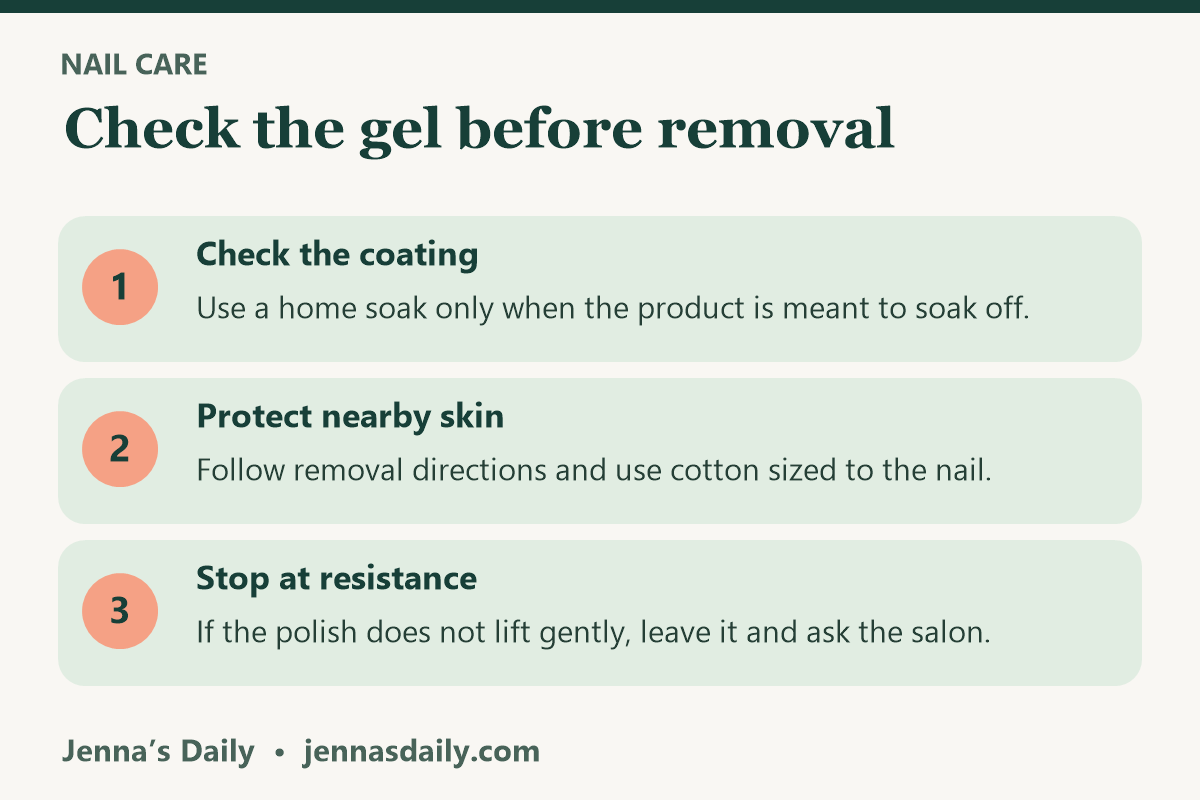
Look for removal directions on the product or ask the salon for the name and removal method. If the instructions do not say it can soak off, arrange removal with the salon. Use the same option if you cannot identify the product, your skin is already irritated, or you have previously reacted to a remover.
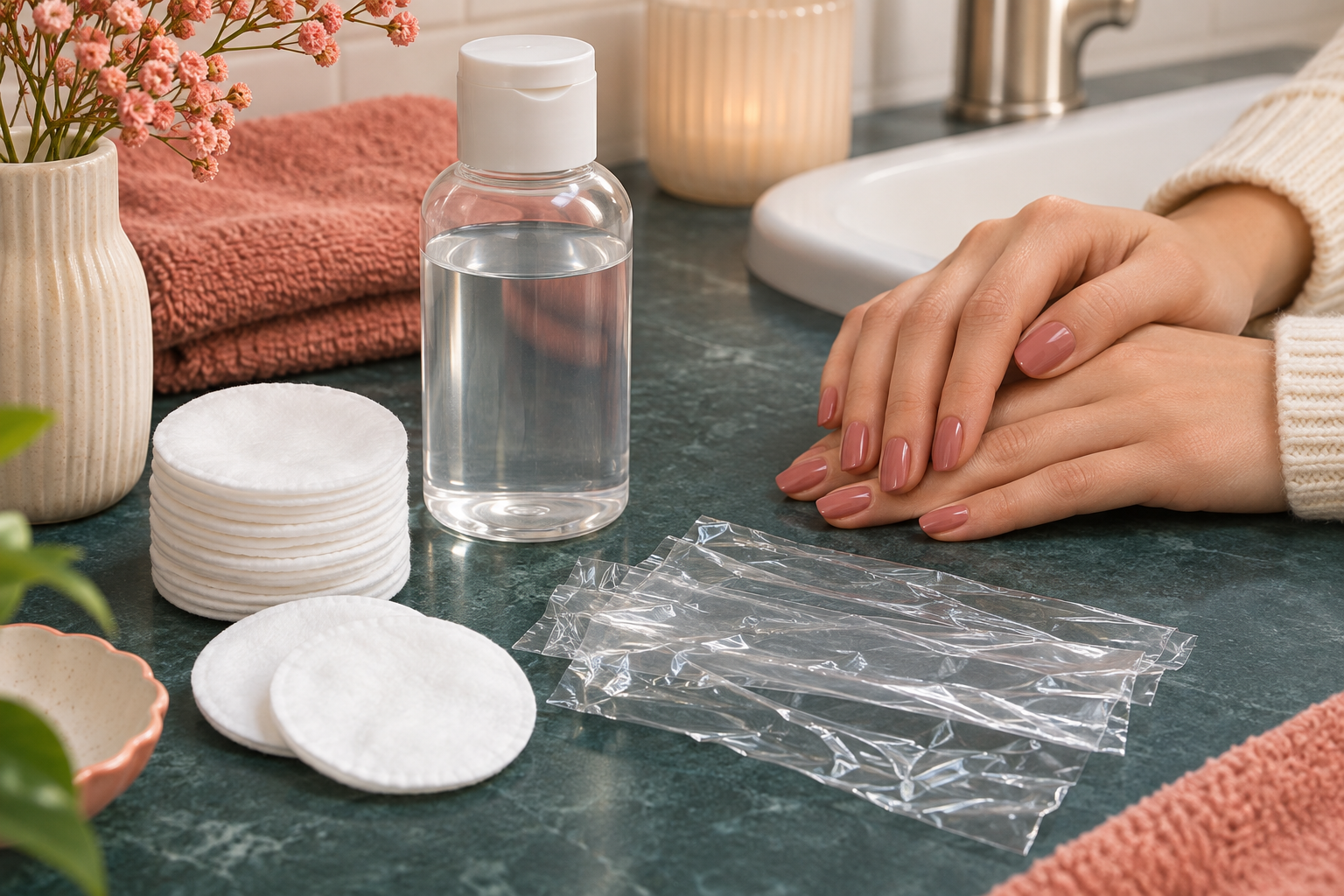
If the gel is confirmed as soak-off, protect your work surface with a towel and work in a well-ventilated area away from flames and heat. Read the remover warnings, keep it away from the eyes, and set out nail-sized cotton, petroleum jelly, plastic wrap, and a washcloth.
Follow a gentle soak-off method
The AAD describes a home technique using 100% acetone and nail-sized cotton for gel nail polish. Use the product's directions for the manicure you have. Work on one hand at a time so you can fit the cotton and wrap without rushing.
- Apply a thin layer of petroleum jelly to the cuticle and surrounding skin.
- Place a nail-sized piece of acetone-dampened cotton on each nail, then secure it with plastic food wrap. Keep the wrap snug without restricting circulation.
- The AAD technique uses 10 minutes. After removing the wraps, gently wipe softened residue from the nail with a warm, damp washcloth. Stop if it does not lift easily.
Wash your hands with mild soap and water after removal. The AAD suggests applying petroleum jelly to the cuticles and surrounding skin daily for seven days to reduce irritation.
Stop if the polish is still attached
If the coating does not soften enough to wipe away gently, stop and ask the salon how that product is removed. Reaching for a tool to pry it off defeats the purpose of the soak. If a nail problem persists or you notice an unusual change, see a dermatologist instead of covering it with a new manicure.
If the polish still adheres comfortably and you would rather skip remover, you can let it grow out and trim the tips as needed. Resist picking at lifted areas while it grows.
Sources & further reading
- American Academy of Dermatology: Removing Gel Nail Polish at Home ↗
- American Academy of Dermatology: Tips to Reduce Artificial Nail Damage ↗
- American Academy of Dermatology: Gel Manicures and Healthy Nails ↗
- U.S. Food and Drug Administration: Nail Care Products ↗
Manufacturer information, when cited, is a commercial source. It does not establish that a finished product is clinically effective.