A warm or sore spot under a sock is a reason to pause. Friction from a rubbing shoe or sock can lead to a blister, and it is easier to adjust your footwear at a bench than to walk home on a sore heel. Start with a fit check, carry a dry pair of socks and a soft dressing, and decide where you can stop if something starts rubbing.
Check the shoes and socks before you leave
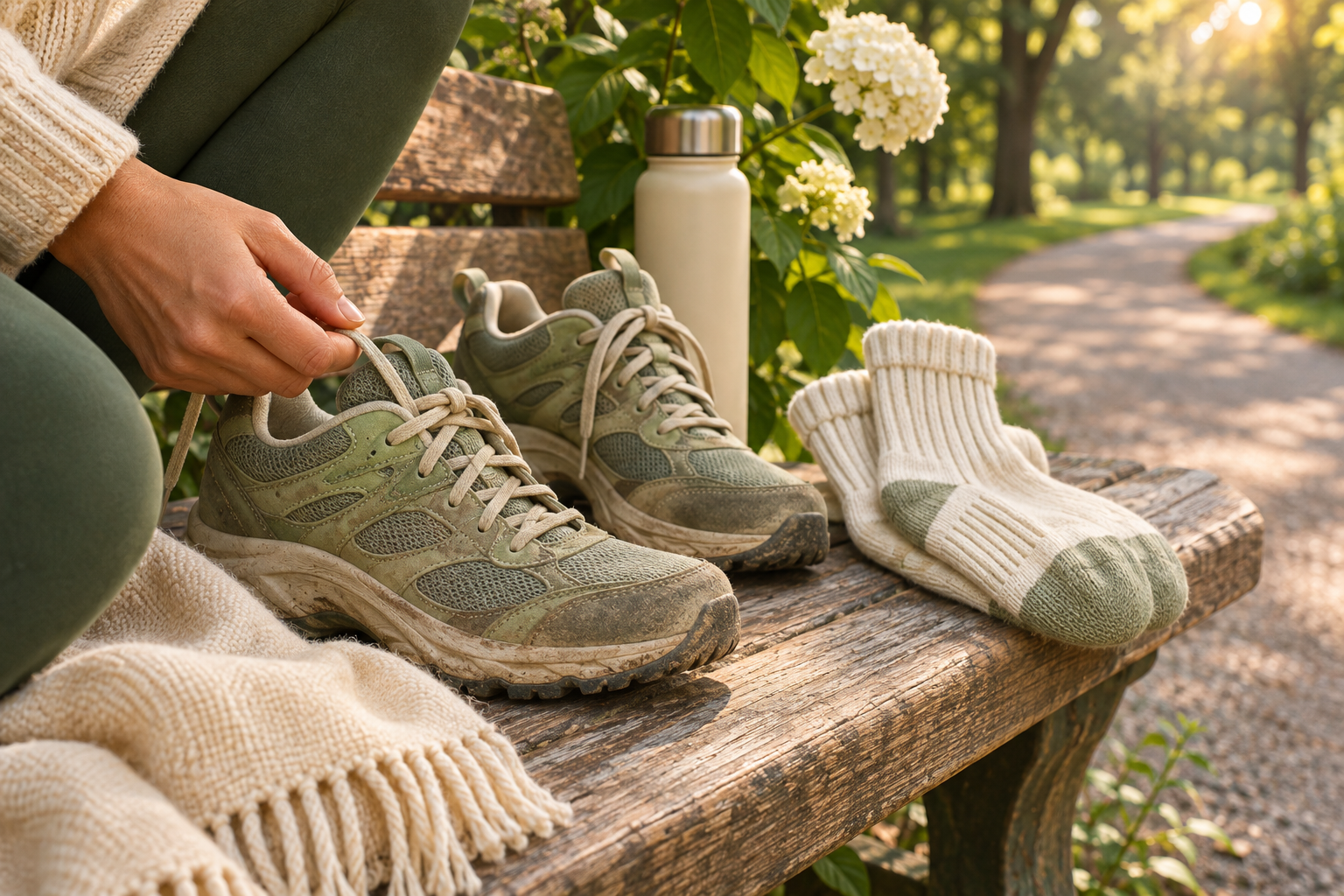
Wear shoes that fit without squeezing or slipping. Try them with the socks you plan to wear, then take a short walk before committing to a longer route in a new pair. Notice whether the heel slides, a seam presses a toe, or the sock bunches under the ball of your foot.
The American Academy of Dermatology (AAD) suggests nylon or moisture-wicking socks for blister prevention. If your shoes still feel comfortable, pack a spare pair in case your socks get wet. You can put a soft adhesive bandage or moleskin over an intact spot that tends to rub.

Stop when you notice rubbing
| What you notice | What to check |
|---|---|
| A rubbing heel | Pause and check the shoe fit and heel lining. |
| A wrinkled or wet sock | Smooth it out or swap it for a dry pair. |
| A sore spot or skin changing color | Stop the activity. Check the area and do not push through continued rubbing. |
If a blister has already formed, stop using the shoe that caused it until the blister heals. Gently wash and dry the area, cover it with a soft dressing, and avoid intentionally popping it. If it opens on its own, clean and cover it and leave the overlying skin in place.
Know when to seek help
Get medical advice if the blister is very painful, keeps coming back, or develops signs such as increasing redness, warmth, swelling, pain, or pus. Check the skin in good light and pay attention to changes that are unusual for you.
If you have diabetes, poor circulation, or reduced sensation in your feet, follow your care team's foot-care plan and contact them promptly about a new blister or open skin. The CDC explains that reduced sensation can make foot injuries easy to miss, even when they need attention.
Sources & further reading
- American Academy of Dermatology: How to Prevent and Treat Blisters ↗
- NHS: Blisters ↗
- Centers for Disease Control and Prevention: Your Feet and Diabetes ↗
- NHS: Peripheral Neuropathy Complications ↗
Manufacturer information, when cited, is a commercial source. It does not establish that a finished product is clinically effective.