
An oral supplement claim can sound specific while leaving the outcome, timeframe, or supporting evidence unclear. Before choosing a product, turn its promise into questions that can be answered. This checklist helps you read a claim without repeating it as fact. It does not determine which supplement, if any, is right for you.
What exactly is the promised outcome?
Copy the claim and identify what would have to change for it to be true. A broad wellness statement, a measurable dental outcome, and a promise to replace a procedure are different assertions. If the wording slides between them, ask the seller to identify the exact outcome and the evidence supporting it.
Read the full context, including the images and surrounding statements. A cautious sentence next to a dramatic result photograph can still leave a strong impression. Do not let a testimonial supply a scientific conclusion that the product description itself does not substantiate. We do not invent personal results or turn someone else’s story into our testing.
Is the evidence about this product?
Ask whether the source studied the finished formulation being sold, an ingredient, a laboratory model, or a different preparation. Then compare the instructions, participants, and measured outcome. A relevant source should help answer the actual claim rather than merely contain an ingredient name that appears on the label.
If you cannot find the cited research, request the full reference. A list of scientific-looking titles is not enough to establish that they support the promise. Keep unresolved questions visible and avoid assigning an evidence score that suggests a thorough assessment has been completed when it has not.
| Check | Record | Why it helps |
|---|---|---|
| Outcome | A specific measurable promise | Avoid vague-to-clinical leaps |
| Evidence | Exact formulation and study | Check relevance, not appearance |
| Care impact | What you would change | Avoid delaying needed treatment |
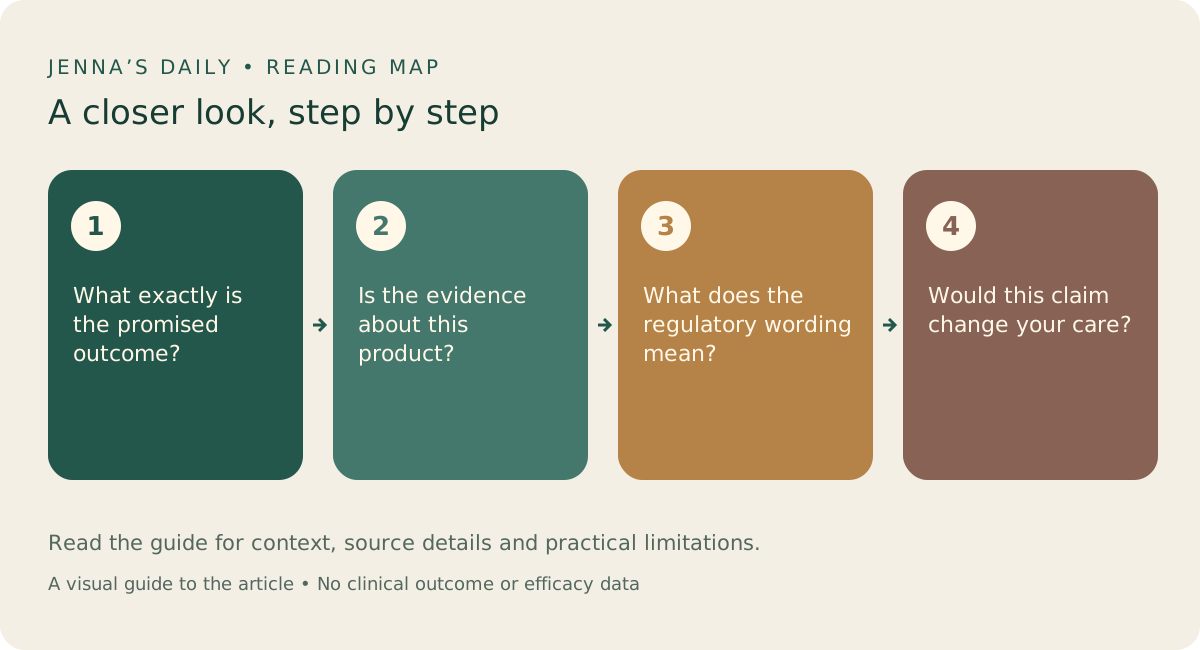
What does the regulatory wording mean?
FDA explains that certain supplement structure/function claims are not preapproved by the agency and carry a disclaimer. That wording is not a certification of effectiveness. It also does not make an unsupported health claim true. Read the product’s intended use and the evidence rather than treating a disclaimer as a substitute for either.
Likewise, terms such as natural or a refund promise do not establish universal safety. Personal suitability can depend on information outside a promotional page. Ask a clinician or pharmacist about relevant medicines and conditions using the current complete label, not a screenshot of only the headline.
Would this claim change your care?
Ask whether the product’s promise would lead you to delay a dental appointment, skip fluoride toothpaste, or abandon a recommended procedure. The ADA’s everyday-care advice remains a more appropriate starting point than an unverified supplement promise. A painful or concerning dental problem needs professional assessment, not a sequence of new products.
DentaBiome’s public marketing includes strong claims that this article does not adopt. Its current full label and finished-product evidence need separate verification. Use the checklist to request specific answers, then decide with appropriate professional input whether the product has any place in your care. Choosing not to buy while important questions remain is a complete decision.
Keep a claim log you can discuss
Choose one statement rather than trying to evaluate the whole sales page at once. Write the promise, the source offered for it, and what it would lead you to change. Take that short record to your dental professional if needed. The exercise should clarify a care decision, not turn shopping into a requirement to research every ingredient yourself.
Sources & further reading
- FDA: Structure/Function Claims ↗
- FDA: FDA 101 — Dietary Supplements ↗
- American Dental Association: Brushing Your Teeth ↗
- DentaBiome: Manufacturer marketing page, not clinical verification ↗
- ISAPP: What is a postbiotic? ↗
Manufacturer information, when cited, is a commercial source. It does not establish that a finished product is clinically effective.