
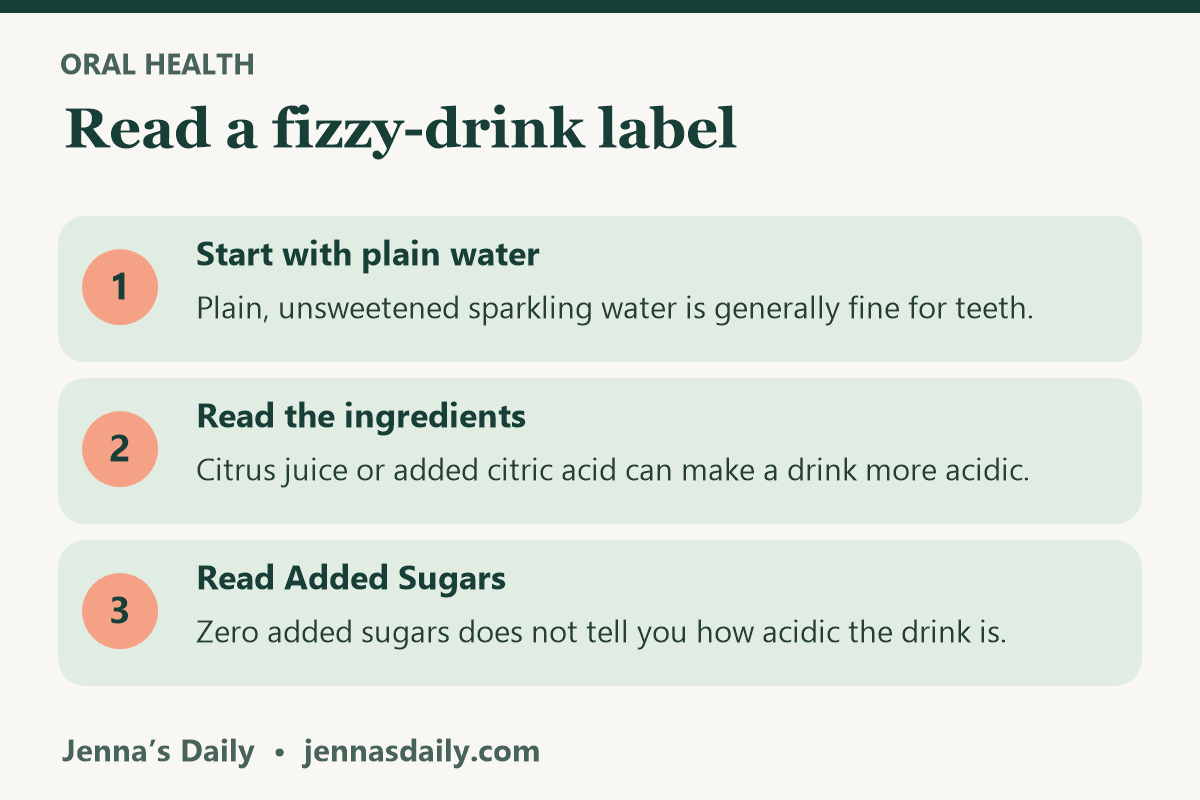
If you switched from soda to sparkling water, you may wonder whether the bubbles pose the same problem for your teeth. Plain, unsweetened sparkling water is generally fine for teeth, according to the American Dental Association (ADA). Citrus flavorings and added sugars change what to look for. Start with what is in the drink and how often you sip it.
Check what is in the fizz
Carbonation makes plain sparkling water slightly more acidic than still water. The ADA notes that a laboratory comparison found similar effects on enamel from the plain sparkling water and regular lab water tested. That finding is about plain water. It does not tell you how a particular flavored drink will affect your teeth over months of sipping.
| Drink | What to look for |
|---|---|
| Plain, unsweetened sparkling water | Check for plain carbonated water without added sugar or citrus ingredients. |
| Citrus-flavored sparkling water | Citrus ingredients can raise acidity even when the drink lists zero added sugars. |
| Sweetened sparkling drink | Check Added Sugars and the ingredients. Added sugar raises a cavity concern, and acidic ingredients can raise an erosion concern. |
Acid and sugar affect teeth in different ways
Dental erosion happens when acids, such as those in certain drinks, wear away tooth material. Cavities can develop when bacteria in plaque use sugars and produce acids. One drink can involve both processes. A zero-sugar label can help answer the sugar question, but it does not tell you how acidic the drink is.
Look for ingredients such as lemon or lime juice and added citric acid when comparing packages. The ingredient list does not give you an exact acidity measurement or a reliable ranking of every brand.
Make plain water your between-meals drink
The ADA suggests drinking citrus-flavored sparkling water with a meal or in one sitting. Carry plain water for the stretches when you tend to take a sip every few minutes.
- Have an acidic drink with a meal when practical.
- Swallow it without holding or swishing it around your mouth.
- Rinse with plain water afterward. Avoid brushing immediately after an acidic drink.
Bring recurring sensitivity to your dentist
If cold drinks regularly make your teeth sensitive, mention the pattern to your dentist. Sensitivity can have different causes, and your dentist can check for enamel wear and other problems. Bring a photo of a label if one drink has become an all-day habit.
Sources & further reading
- American Dental Association MouthHealthy: Is Sparkling Water Bad for My Teeth? ↗
- American Dental Association: Dental Erosion ↗
- American Dental Association MouthHealthy: Dietary Acids and Your Teeth ↗
- American Dental Association MouthHealthy: Sugary Drinks ↗
Manufacturer information, when cited, is a commercial source. It does not establish that a finished product is clinically effective.