The last brush before leaving often happens minutes before the suitcase closes. You may not have time for everything to dry. A useful travel routine accounts for that moment and the first few minutes after arrival. Think of packing and daily storage as two different tasks, with a clear handoff between them.
Start with the everyday storage habit
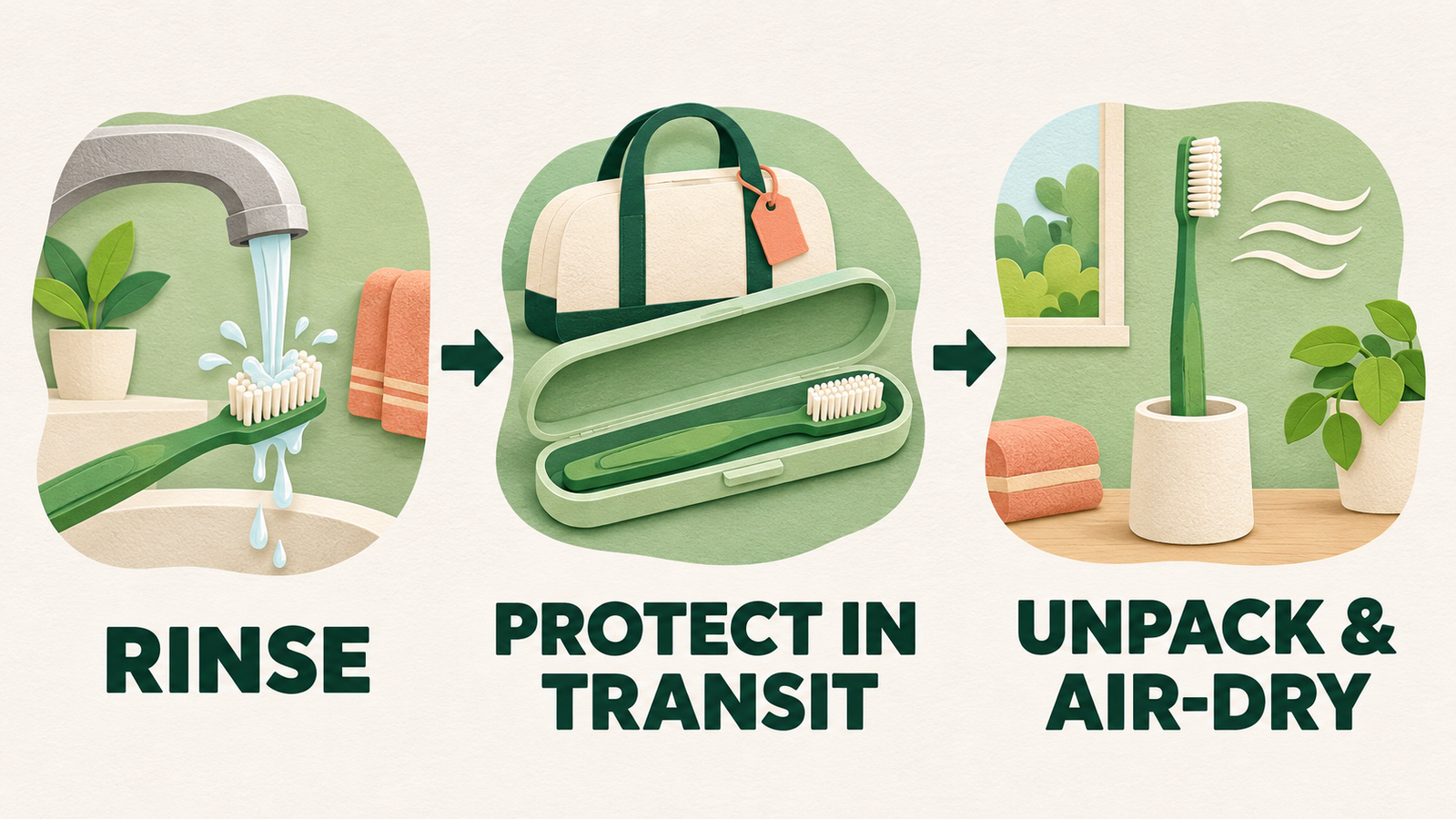
The American Dental Association advises rinsing a toothbrush thoroughly after use, then storing it upright so it can air-dry. Keeping a moist brush enclosed encourages more microbial growth than leaving it exposed to air. The ADA also notes that bacteria on toothbrushes have not been shown to cause adverse health effects; this is a care habit, not a reason for alarm.
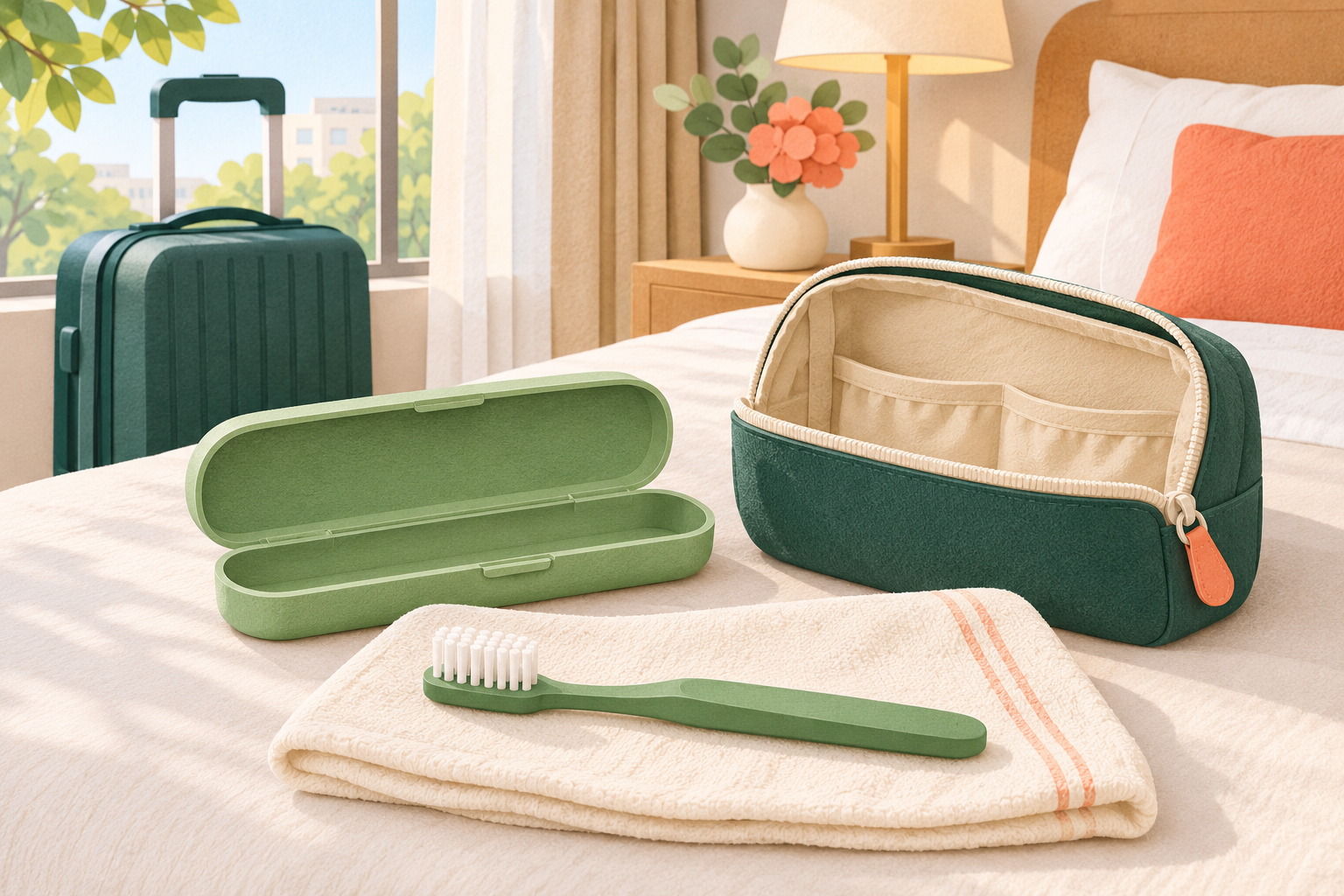
Before a trip, decide where the brush will go in your bag and where you will put it at your destination. That small plan saves you from treating a zipped toiletry pouch as the brush's permanent home.
Protect it for the journey
MouthHealthy's travel guidance allows a resealable bag to keep a toothbrush apart from other luggage contents, even when there is no time to dry it first. The next step is opening it at the destination. A rule that a wet brush must never enter a closed bag misses that temporary transport situation.
| Packing moment | Practical step | Why it matters |
|---|---|---|
| Before departure | Assign the brush its own place | Makes the packing decision repeatable |
| During the journey | Keep it separate from other objects | Distinguishes transport from daily storage |
| On arrival | Unpack and allow air-drying | Finishes the travel routine |
For example, keep the dental kit accessible if you expect to reach your room before unpacking everything else. A long journey with several stops may need a reminder at each change of accommodation, rather than an elaborate new container.
Make unpacking the next small task
Imagine arriving late: the suitcase stays by the door while you look for pajamas. Put the toothbrush on your first-unpacking list with the items you will use that evening. Choose an upright place where it can air-dry, rather than forgetting it inside the travel bag.
- Open the dental kit when you settle in.
- Take the brush out of its transit enclosure.
- Give it an upright air-drying place.
- Remember it during the next departure check.
Keep maintenance ordinary
Do not share toothbrushes. The ADA recommends replacing one about every three to four months, or sooner when bristles are matted or frayed. It advises against microwaving a brush or putting it in a dishwasher because heat may damage it.
Use packing day as a chance to look at the brush you already own. You do not need to buy a different model for every trip. Add a replacement to the shopping list when it is due, and keep that decision separate from choosing luggage accessories.
Check the water situation separately
MouthHealthy advises brushing with bottled water where the water supply is compromised. Check that question for your destination instead of assuming every unfamiliar tap is unsuitable. Put any water arrangements on the same practical list as your accommodation details, so they are settled before your evening routine.
Sources & further reading
- American Dental Association: Toothbrushes ↗
- MouthHealthy from the ADA: 8 Travel Tips for Your Teeth ↗
Manufacturer information, when cited, is a commercial source. It does not establish that a finished product is clinically effective.