
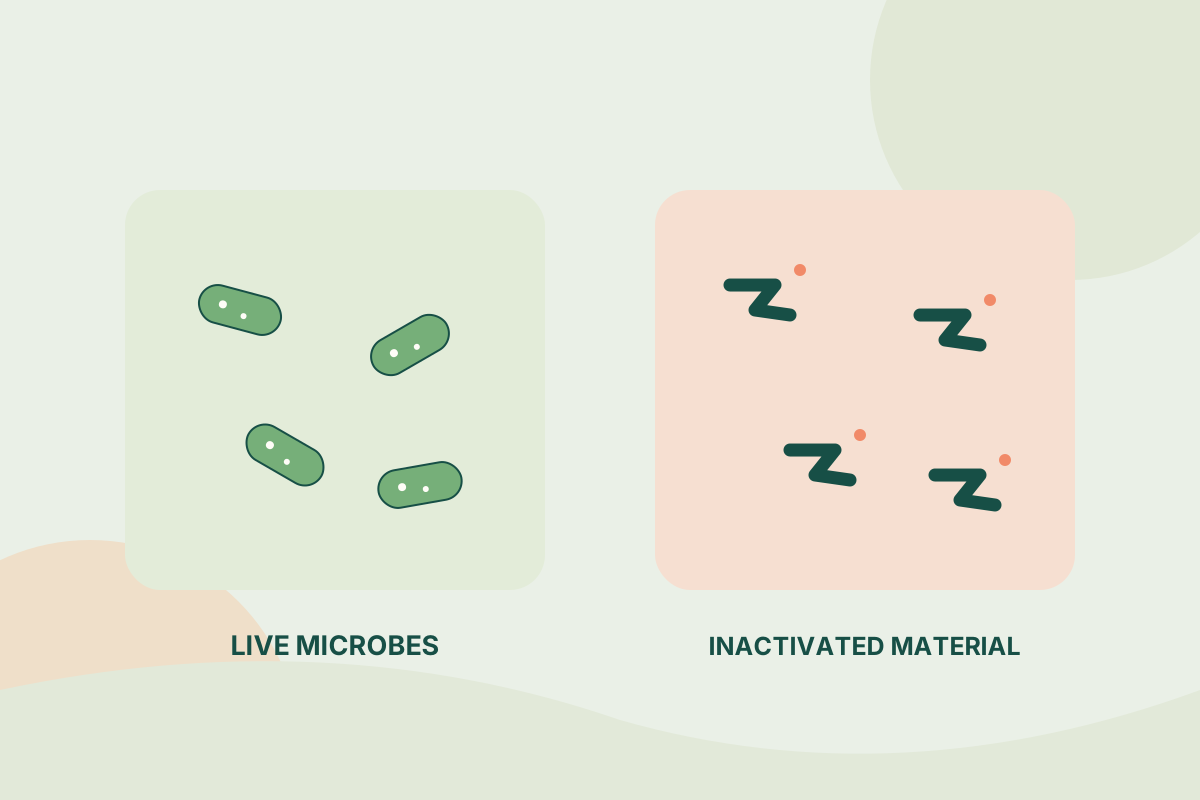
Probiotic and postbiotic are related scientific terms, but they do not mean the same thing. That distinction matters when reading an oral-wellness product page: a live-count headline is not a universal comparison tool, and a category name is not proof of a result. Start by asking what preparation the label actually describes.
Understand what probiotic refers to
NIH describes probiotics as live microorganisms that provide a health benefit when used in adequate amounts. A label may identify organisms and give a live-count statement, but the exact preparation and evidence still matter. A generic bacterial name does not establish that every product containing it has the same effect.
For a label-reading exercise, write the claimed category and the information offered to support it. If a page uses the word probiotic but does not clearly identify its organisms or current package, keep those fields open. Do not complete them from another product simply because the branding looks similar.
Understand what postbiotic refers to
The ISAPP consensus definition concerns a preparation of inanimate microorganisms or their components that confers a health benefit. It requires more than saying the microbes are no longer alive. Purified metabolites alone do not establish the category, and a killed probiotic is not automatically a demonstrated postbiotic preparation.
That definition guides the questions to ask: what microbial material remains, how is the preparation characterized, and what evidence supports the claimed benefit? It is not a reason to assume that every inactivated ingredient is effective. Nor does it make a postbiotic inherently better than a live preparation for every purpose.
| Check | Record | Why it helps |
|---|---|---|
| Probiotic | Live organism and relevant evidence | Do not infer benefit from a name |
| Postbiotic | Characterized inactivated preparation | Do not equate it with any metabolite |
| Comparison | Appropriate identity and quantity fields | Avoid a universal CFU ranking |
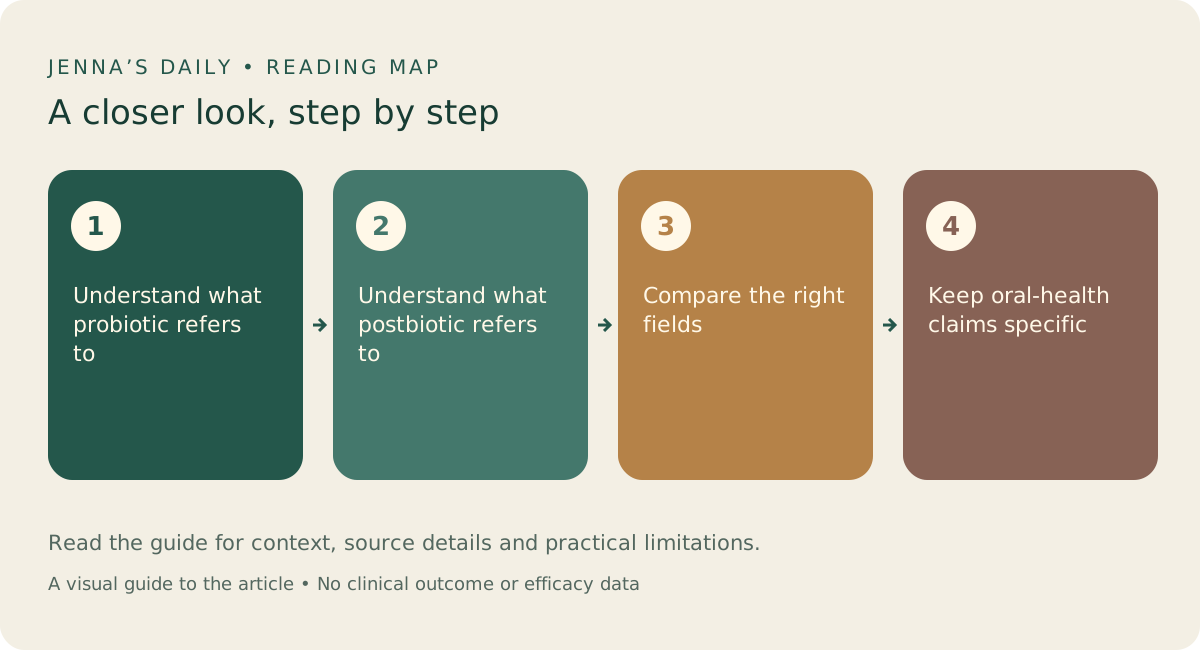
Compare the right fields
A CFU figure concerns viable microorganisms, so it is not a simple universal score across live and inactivated preparations. For a postbiotic, the identity and characterization of the preparation and its supporting research may be central to the assessment. Do not award a product points merely because its count is larger or because it avoids a live-count comparison.
Keep product category, disclosed quantity, intended use, and evidence on separate rows. You may find that two products cannot be compared with one number. That is a useful result: it prevents a simplified ranking from implying information the labels do not provide. A clear explanation can be more helpful than a winner badge.
Keep oral-health claims specific
DentaBiome’s public page uses postbiotic language, but we have not verified its complete current label or the preparation details needed to assess that description. This article therefore explains the terms without certifying the brand’s category or clinical performance. A seller’s use of a scientific term should remain attributed to that seller until evaluated.
Ask your dental professional about any specific oral product you are considering. Do not use a terminology distinction to replace fluoride toothpaste, cleaning between teeth, or treatment recommended for a dental problem. The term on a package is a starting point for a question, not a substitute for an individual care decision.
A hypothetical category comparison
A fictional live-organism product and a fictional inactivated preparation might each have detailed labels, yet still require different evidence questions. Do not demand a live-count guarantee from the inactivated preparation simply to make a chart symmetrical. Instead, ask each product to identify its own preparation and support its own specific claimed outcome with relevant evidence.
Sources & further reading
- NIH Office of Dietary Supplements: Probiotics ↗
- ISAPP consensus statement: Definition and scope of postbiotics ↗
- American Dental Association: Brushing Your Teeth ↗
- DentaBiome: Manufacturer marketing page, not clinical verification ↗
- ISAPP: What is a postbiotic? ↗
Manufacturer information, when cited, is a commercial source. It does not establish that a finished product is clinically effective.