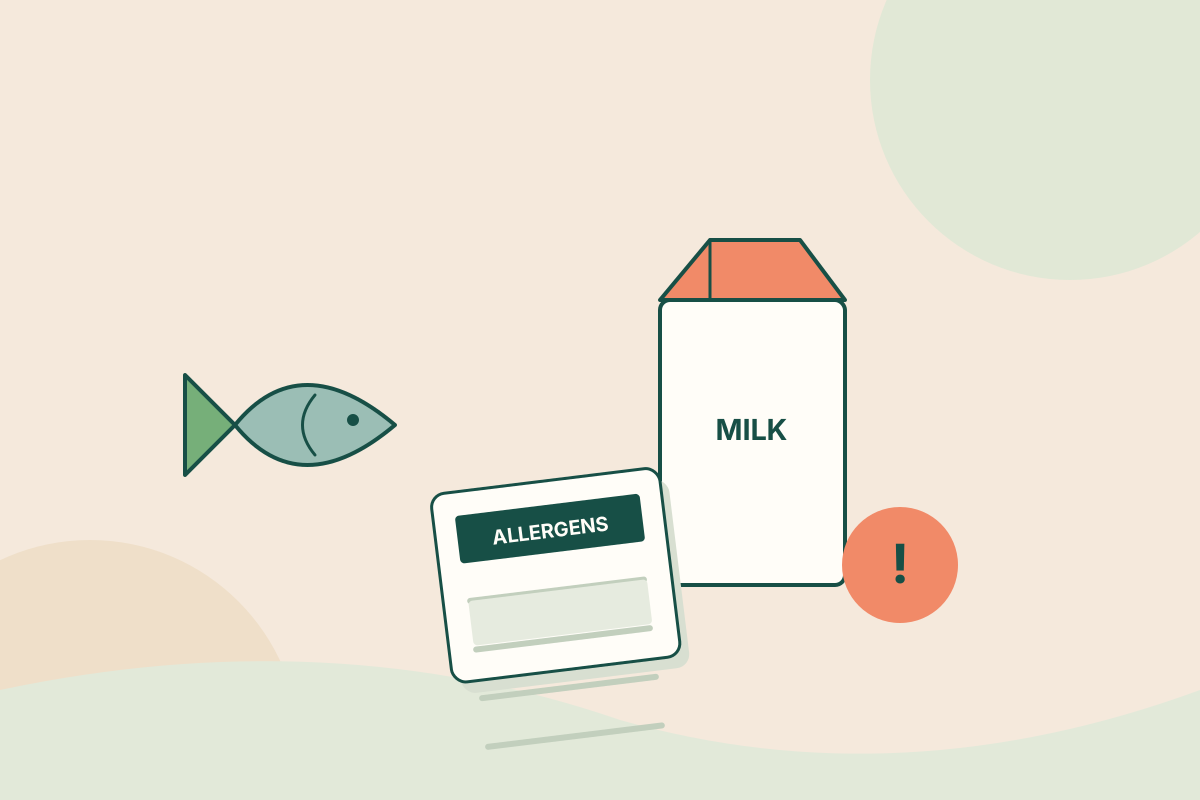
A supplement can be marketed for digestive wellness while still raising an important food-allergy question. Read the complete package rather than relying on a friendly product name or a short ingredient graphic. This guide explains how to organize fish and milk label questions. It cannot establish whether a supplement is safe for a particular person.
Look at the package you would actually receive
Begin with a current, readable package label. The FDA identifies fish and milk among the major food allergens recognized in the United States. Ingredient information and any allergen declaration should be read together. A front label that highlights only selected ingredients does not provide the same picture as the complete package.
Save the version and the seller’s identity with your notes. If you are comparing an old package photograph with a new listing, ask whether the formula or manufacturing information changed. Reordering a familiar product is not a reason to skip checking the delivered label. Keep uncertainty visible rather than assuming the earlier answer still applies.
Distinguish the ingredient question from cross-contact
There are at least two questions to ask: whether an allergen is an intended ingredient, and what information the manufacturer provides about possible unintended contact. A brief website list may answer neither completely. The FDA explains that advisory statements such as may contain are voluntary; their absence should not be converted into a guarantee.
Use precise wording when contacting a seller. Ask about the exact product and package version, not whether the company makes any allergy-friendly products. Keep the written response if it is relevant to your decision, and have your allergy-care professional help interpret an answer that remains incomplete or ambiguous.
| Check | Record | Why it helps |
|---|---|---|
| Identity | Exact product and package | Avoid using an old formula |
| Ingredients | Complete list and declaration | Read beyond headline ingredients |
| Uncertainty | Written manufacturer question | Avoid personal safety guesses |
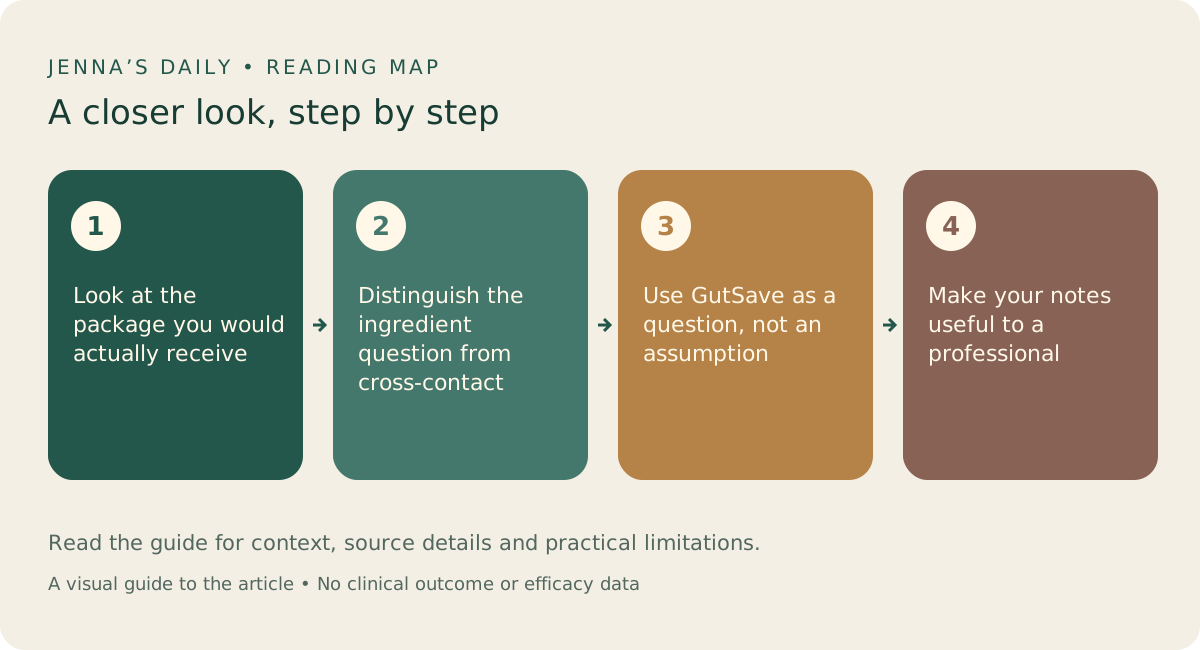
Use GutSave as a question, not an assumption
GutSave’s public sales page checked on November 2, 2026 names fish collagen peptides and colostrum. That is a reason to obtain the current complete ingredient and allergen information. It is not enough for us to certify the finished product’s allergen declaration, manufacturing controls, or suitability for someone with an allergy.
Do not turn a marketing word into a personal safety conclusion. A label-reading guide can identify what needs checking; it cannot set an individual threshold or recommend trying a small amount. If you have a diagnosed allergy, use the avoidance and emergency plan established with your care team instead of experimenting to resolve a label question.
Make your notes useful to a professional
Bring the full label, the seller’s reply, and the exact question you are trying to answer. Separate confirmed text from guesses. For example, write that a page names an ingredient rather than writing that the complete product has been certified safe or unsafe. That distinction helps a clinician address the actual uncertainty.
If an answer is not available, you do not need to complete a purchase to keep researching. This article makes no GutSave safety recommendation. Its purpose is to make a label conversation more specific and prevent an incomplete promotional page from replacing the information you need for a careful decision.
Write the question before contacting support
A concrete message might identify the exact package and ask for its full current ingredient list, allergen declaration, and relevant manufacturing information. Avoid asking only whether the product is good for sensitive stomachs; that phrase does not specify your allergy question. Keep the answer intact so your care professional can see precisely what the seller confirmed.
Sources & further reading
- FDA: Food Allergies — What You Need to Know ↗
- GutSave: Manufacturer marketing page, not independent clinical evidence ↗
- FDA: Food Allergies — advisory labeling and cross-contact ↗
Manufacturer information, when cited, is a commercial source. It does not establish that a finished product is clinically effective.