
The carton marked lactose-free may look like a plant-based swap, but lactose-free cow’s milk is still dairy. If you’re shopping for yourself, begin by separating two decisions. One is whether you need less lactose. The other is which nutrients you want your usual drink to provide.
Start with lactose and milk protein
Lactose is a sugar found in milk. Lactase is the enzyme that helps break it down. In lactose intolerance, the body has trouble digesting enough of that sugar, which can lead to gas, bloating, or diarrhea. The amount someone can tolerate varies.
Milk allergy involves the immune system reacting to milk proteins. Reducing the lactose in cow’s milk leaves those proteins in the carton. If you have a milk allergy, follow your allergy care plan and check the ingredients and allergen information.
| Carton | What it means at the shelf |
|---|---|
| Regular cow’s milk | Contains lactose and milk proteins. Compare products using the same serving size. |
| Lactose-free cow’s milk | Still contains milk proteins. Check the label for the nutrition you want from dairy. |
| Fortified soy beverage | Plant-based and contains soy. Check the ingredients and look for added calcium and vitamin D. |
Turn both cartons around
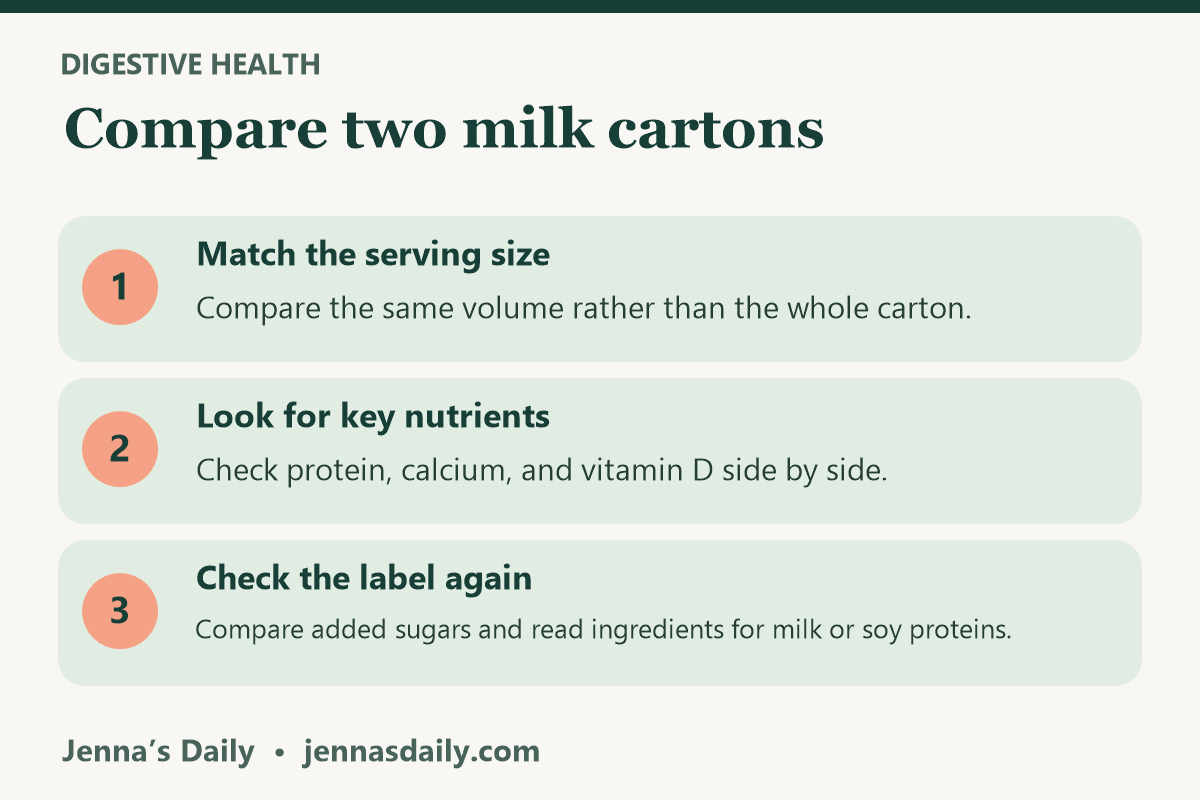
The FDA recommends checking Nutrition Facts because plant-based beverages vary. Fortified soy can provide nutrients similar to dairy milk, depending on the product. An oat, almond, or soy drink with the same color and texture can still provide a different amount of protein.
- Compare equal serving sizes. The numbers usually apply to the stated serving, not the whole carton.
- Read protein in grams. Check calcium and vitamin D if the beverage will replace the milk you usually drink.
- Look at Added Sugars on flavored and original varieties. Use the actual panel to compare cartons.
Think about where you use the drink
A splash in coffee and a full glass every morning have different roles in your diet. If you regularly replace milk, check what else you eat for calcium and vitamin D. The NIDDK lists foods such as tofu and canned salmon with edible bones as examples of calcium sources, and eggs and salmon as foods that can supply vitamin D.
Some adults with lactose intolerance can tolerate yogurt or hard cheeses such as cheddar. You do not need to remove every dairy food on the basis of a single reaction. Ask a clinician or registered dietitian if symptoms recur or if you plan to cut out a major source of nutrients.
Ask about repeated symptoms
Bloating after milk alone cannot tell you what caused it. Other conditions can produce similar symptoms. If it keeps happening, note what you ate, the amount, and when symptoms started. Take the notes to a clinician. Avoid testing milk at home if a milk allergy is suspected.
Sources & further reading
- NIDDK: Eating, Diet, & Nutrition for Lactose Intolerance ↗
- NIDDK: Symptoms & Causes of Lactose Intolerance ↗
- NIDDK: Diagnosis of Lactose Intolerance ↗
- FDA: Milk and Plant-Based Milk Alternatives — Know the Nutrient Difference ↗
- South Dakota Department of Health WIC: Dairy ↗
Manufacturer information, when cited, is a commercial source. It does not establish that a finished product is clinically effective.